The world model for real-world data
Newton is the intelligence layer for the physical world. It learns how physical systems behave directly from sensor data, fusing hundreds of signals to uncover patterns no single source reveals — predicting unknown failures, explaining root causes in plain language, and automating the response.
Newton
WHY A WORLD MODEL
Newton: a physical world model that learns from sensor data
Physical data is fundamentally different from the text and images of the digital world — it needs a model built from the ground up for it. That model is Newton.
Sensor fusion
Understand patterns across physical signals
Newton learns the underlying physics encoded across sensor data, fusing multiple signals to reveal patterns of physical behavior no single signal can capture alone—from mechanical oscillations to thermodynamics.
Generalization
Generalize to any machine, out of the box
Newton adapts to any machine, environment, or use case. Pretrained on billions of sensor measurements, it extends intelligence across physical systems without building specialized models for every asset, then adapts as conditions change.
Deploy anywhere
Run where physical work happens
Physical operations run far beyond any data center. Remote sites, distributed assets, and bandwidth constrained facilities need decisions in real time, with data that can't leave. Newton runs where the work happens, from the cloud to the edge.
THE MODEL
One Model.
Endless Real-World Applications.
Endless Real-World Applications.
01
Fuse and interpret data from 100s of sensors
02
Adapt pretrained physical world model with a few examples
03
Build and deploy physical agents for every use case



How Newton Sees the Physical World
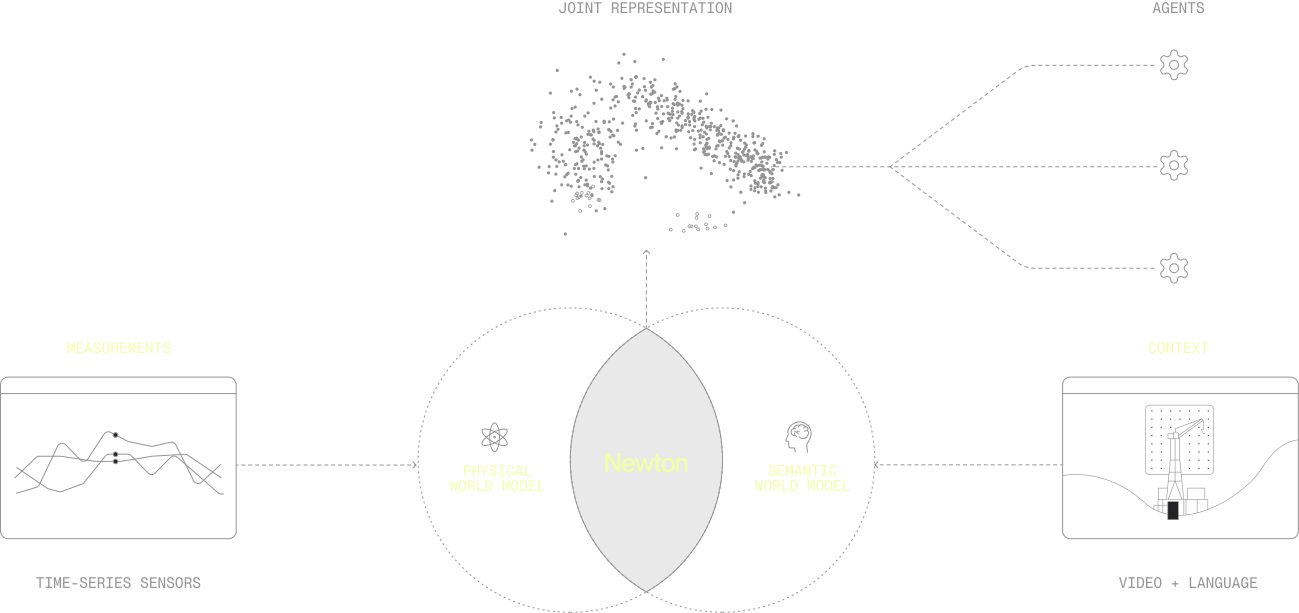
Newton fuses sensor data and context into one real-time representation you can query in natural language.
Machine behavior:
//
motion
//
power
//
electrical
//
etc
Time series sensors
Human behavior:
//
presence
//
activity
//
intent
Video
Context:
//
scene description
//
customer prompts
TEXT
_01
Physics
Physically accurate analysis of hundreds of data types out of the box: time-series sensors (motion, power, electrical) and quantitative tasks like trajectory prediction, anomaly detection, and multivariate analysis.
_02
Semantics
Analysis of physical data in natural language, like talking to a human: contextual inputs such as video and text, and human-like descriptions, alerts, and explanations.
Machine behavior:
trajectory prediction
multivariate analysis
anomaly detection
classification
Machine behavior:
//
descriptions
//
alerts
//
explanations
//
insights
Put Newton to work
Talk with a Physical AI expert and see how to deploy Newton Agents across your use cases, mapped to the outcomes you care about.
blog
The Archetype AI Blog
May 20, 2026
Adaptive World Models: Closing the Operational Intelligence Gap
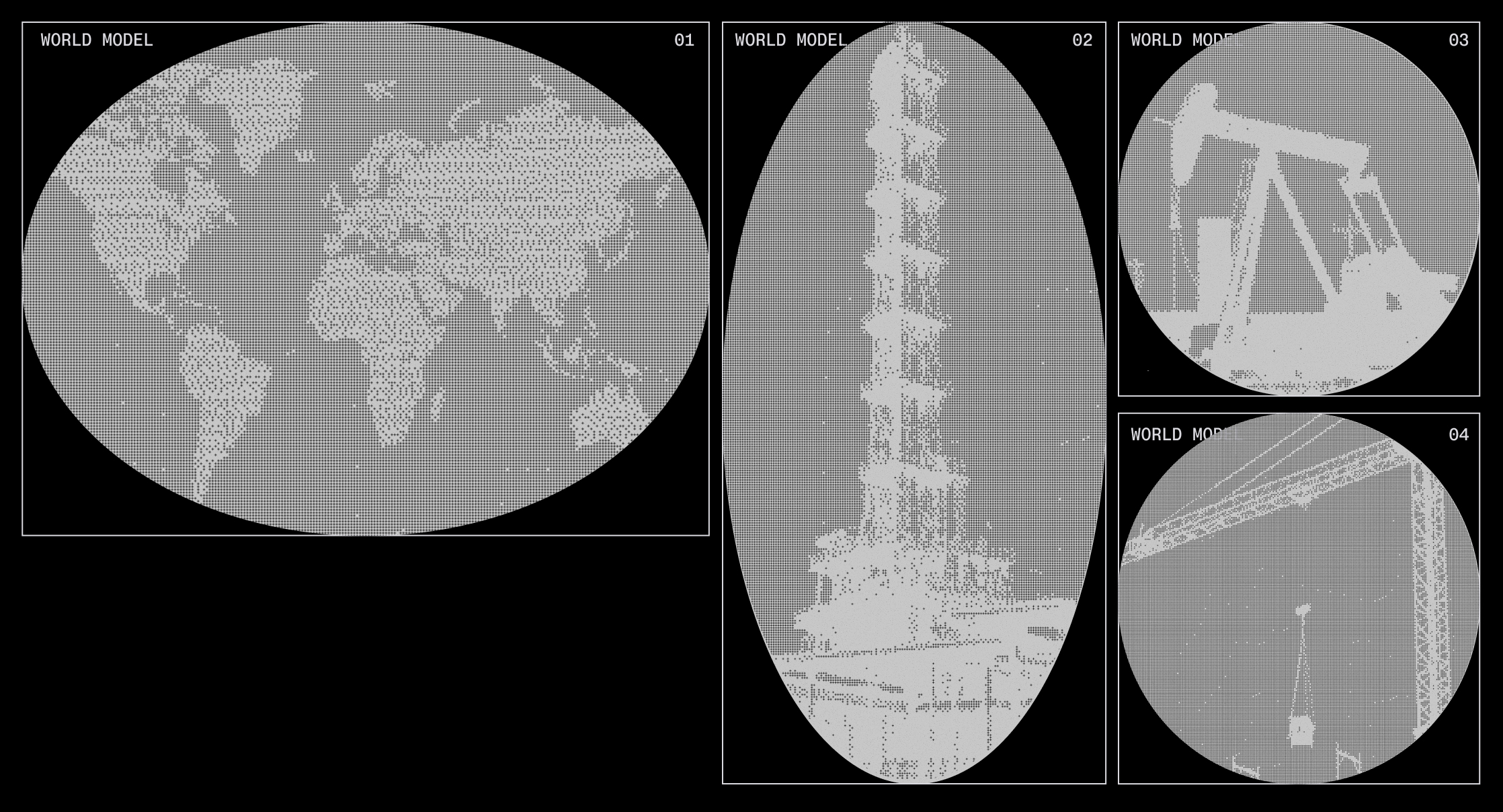
Explore how Adaptive World Models close the operational intelligence gap in physical industries—helping machines learn their own behavior directly from sensor data, adapt locally to each deployment, and turn complex signals into actionable operational states.
Nov 20, 2025
TimeFusion: Natural-Language Intelligence for Your Sensors
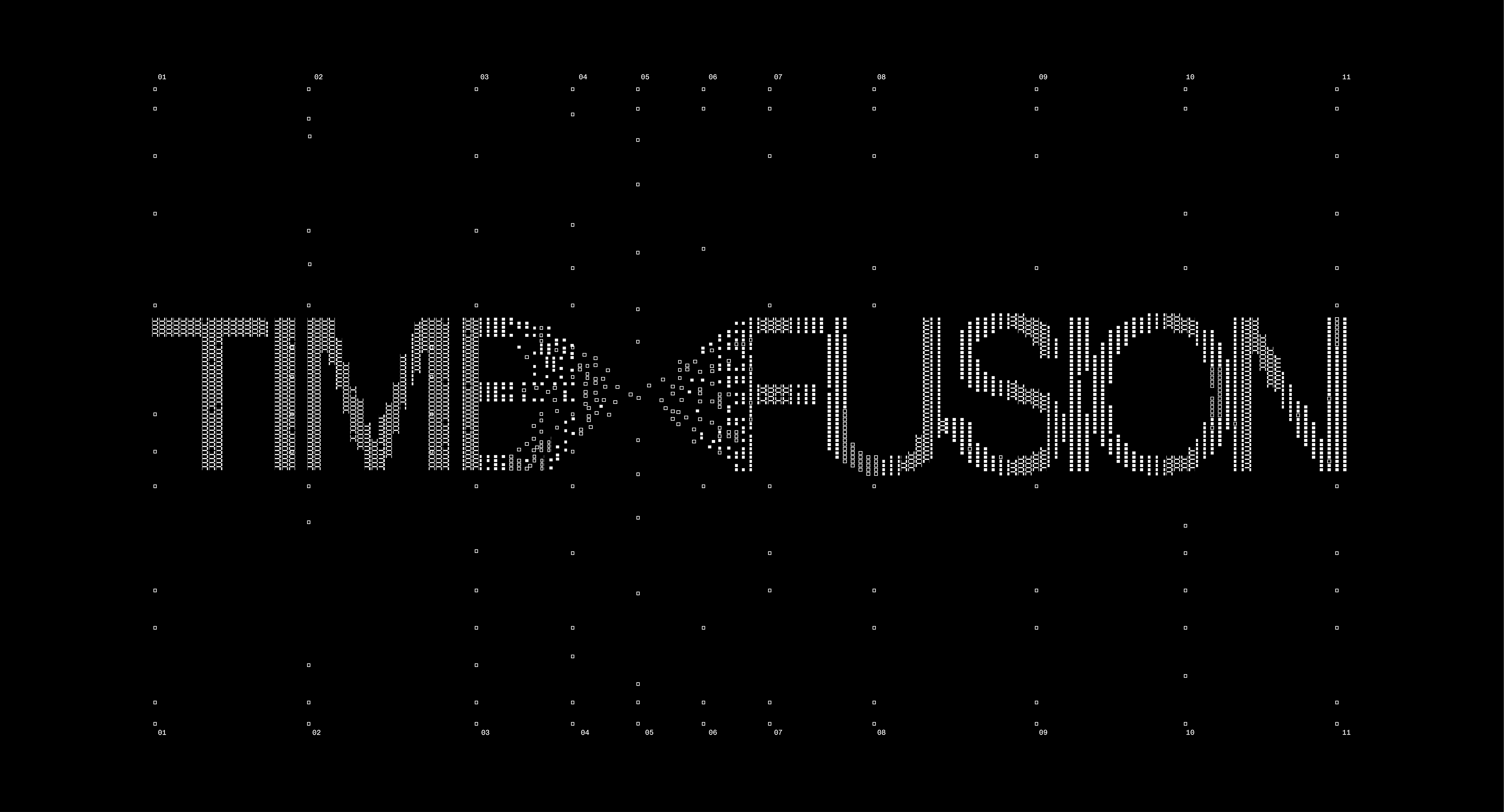
Introducing Newton TimeFusion, Archetype's 2.0B-parameter multimodal model that unifies human language and time-series sensor data using Universal Tokens. This breakthrough creates a "Physical AI" layer, allowing users to have natural conversations with sensors and machines for actionable insights, prediction, and control.

_Schedule a Demo
Put Physical AI to work
Talk with one of our Physical AI experts and learn how to deploy Newton Agents across a wide range of use cases — mapped to the outcomes you care about.
