
Archetype AI Team
Every industrial operation generates data that contains more information than any team can fully process — the behavior of specific machines, the early signatures of failure, the subtle variables that separate a good process run from a bad one. That intelligence has always been there, locked inside operational data too complex and too “physical” for conventional AI to interpret.
Existing approaches have all come with painful trade-offs. Traditional build-your-own-model efforts require significant resources, demand custom builds for every use case, and often stretch into years-long endeavors. Tapping into cloud AI means continuously sending sensitive proprietary data outside your infrastructure. The most valuable intelligence your operations contain has remained out of reach — until now.
Newton — built for your physical world
Most AI was built to understand the digital world. Newton was built to understand the physical world. Trained at scale on diverse real-world sensor data, Newton is a foundation model that delivers physical world intelligence in a way language models were never designed for.
Newton was built on a simple idea: AI should understand the world as it actually exists, not through assumptions or internet data, but through direct observations of physical systems. By learning without bias through your sensors, machines, and environments, we can capture a deeper, more accurate understanding of the physical world, including the relationships assumptions often miss. Local, specific, and contextual to your operations. We call this local world intelligence.
AI grounded in your operations
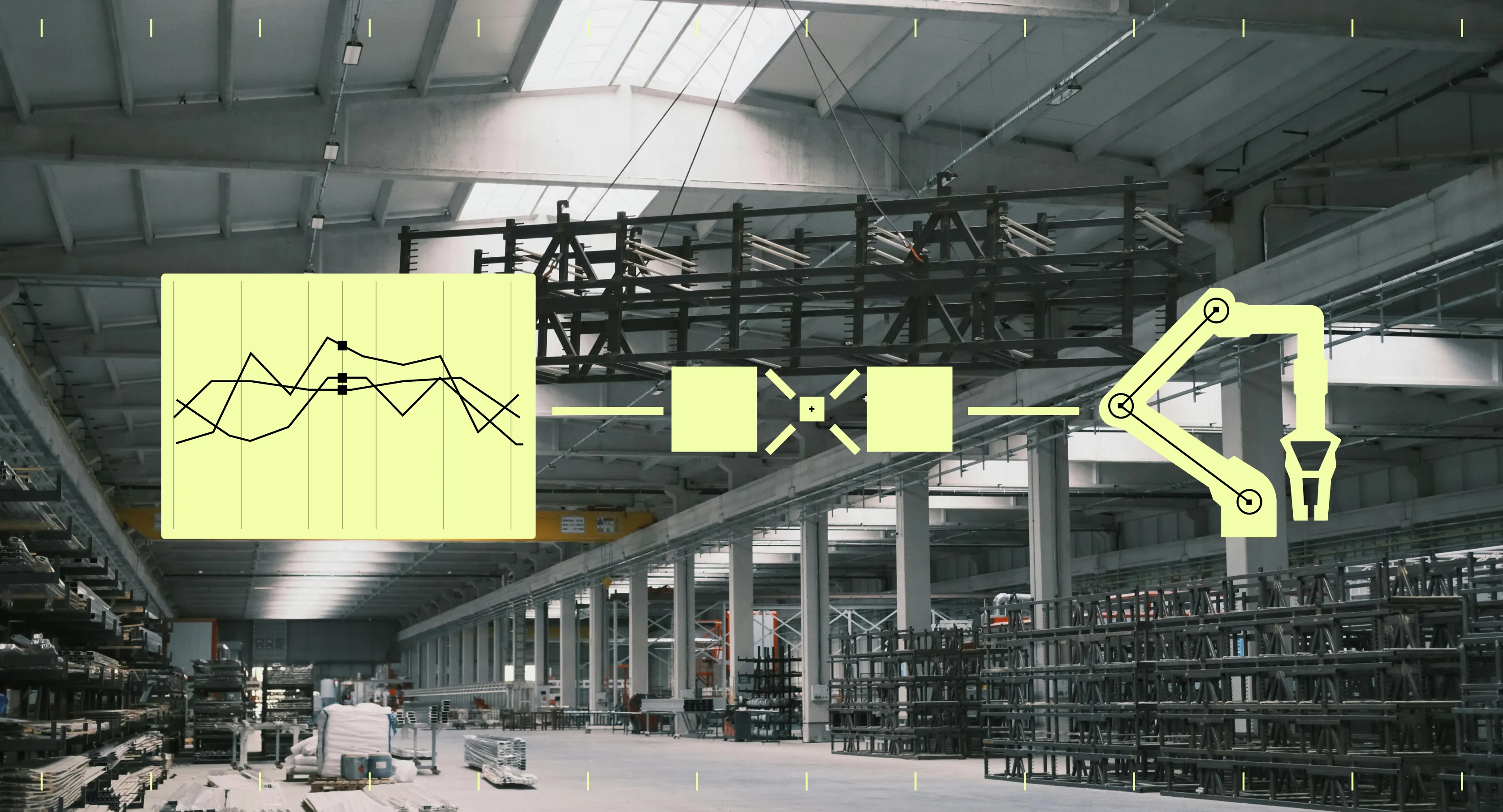
We’re introducing new ways to make AI specific to your operations — grounded in your data, tailored to your processes, and deployed on your terms. With this update, you can fine-tune Newton to your operational data on your infrastructure, control how and where it runs, and enable it to improve over time. No data movement required.
Most industrial organizations are sitting on years of untapped operational data: sensor streams, equipment logs, and process records that have never been fully utilized. Fine-tuning turns that data into a model that reflects how your operations actually run.
By adapting Newton to your data, you unlock AI that understands your specific machines, environments, and processes — turning hidden know-how into intelligence that finally works for you.
Turning your data into your model
AI that knows your operations
Newton already understands physical systems at scale — across sensor modalities, machine types, environments, and conditions. Fine-tuning takes that foundation and adapts it to your specific operations: the exact behaviors of your systems, failure signatures that matter at specific facilities, and the process variables unique to your production environment. The result is a unique local world model that has internalized your machines, processes, and operating conditions at a level that no off-the-shelf AI can reach.
And because Newton already understands the physical world, you don’t need years of labeled data to get there. A focused set of your operational data is sufficient to unlock a deep understanding of your systems.
Runs within your infrastructure—from cloud to edge
Your operational data — sensor readings, process parameters, equipment performance records — reflects years of accumulated knowledge about how your specific environment works. It's some of the most valuable and sensitive information your organization holds. With the Archetype platform, it never leaves your environment and neither does your model.
Fine-tuning workflows run fully inside your infrastructure, on-premises or in your private cloud. Once customized, your model runs there too — on-premises, at the edge, or wherever your operations run. No inference calls to the cloud, no connectivity dependency, no shared infrastructure, no data leaving your perimeter at any point in the process. Your data stays where it belongs and where it's always been most valuable.
Intelligence that evolves with your operations
Equipment gets replaced, processes evolve, new facilities come online. Operations change and Newton adapts with them. As new data becomes available, you can continue to fine-tune Newton, so it stays current with your environment.
Rapid adaptation doesn't always require a full fine-tuning cycle. Provide a handful of examples in context and Newton adjusts immediately — no retraining required. The result is two speeds of adaptation: fine-tuning for significant changes, few shot learning for fast iteration. Your AI keeps pace with your operations, not the other way around.
From operational data to competitive advantage
AI has long promised to transform industrial operations, but until now it has remained disconnected from the environments it's meant to understand. Industrial operations have always been defined by the people who understand them best — the engineers who know the machines, the operators who know the processes, the teams who have accumulated that knowledge over years.
By fine-tuning Newton, you start with a foundation that understands the physical world, then make it your own: adapted to your data, deployed on your infrastructure, and continuously evolving with your operations. This marks a shift from intelligence that was always out of reach to AI that finally knows your world.