
Archetype AI Team
Industrial teams have built sophisticated tools to monitor, analyze, and control their operations. But much of the work between detecting an issue and responding to it remains manual: interpreting sensor trends, reviewing dashboards and manuals, investigating operating conditions, and determining the right course of action.
The limitation often isn't the ability to automate a response. It's understanding the physical conditions that call for one. Rules and thresholds can reliably detect known conditions, but they struggle to interpret unfamiliar patterns, explain why they're happening, or anticipate what comes next. The more deeply AI understands how physical systems behave, the more of their operation it can automate reliably.
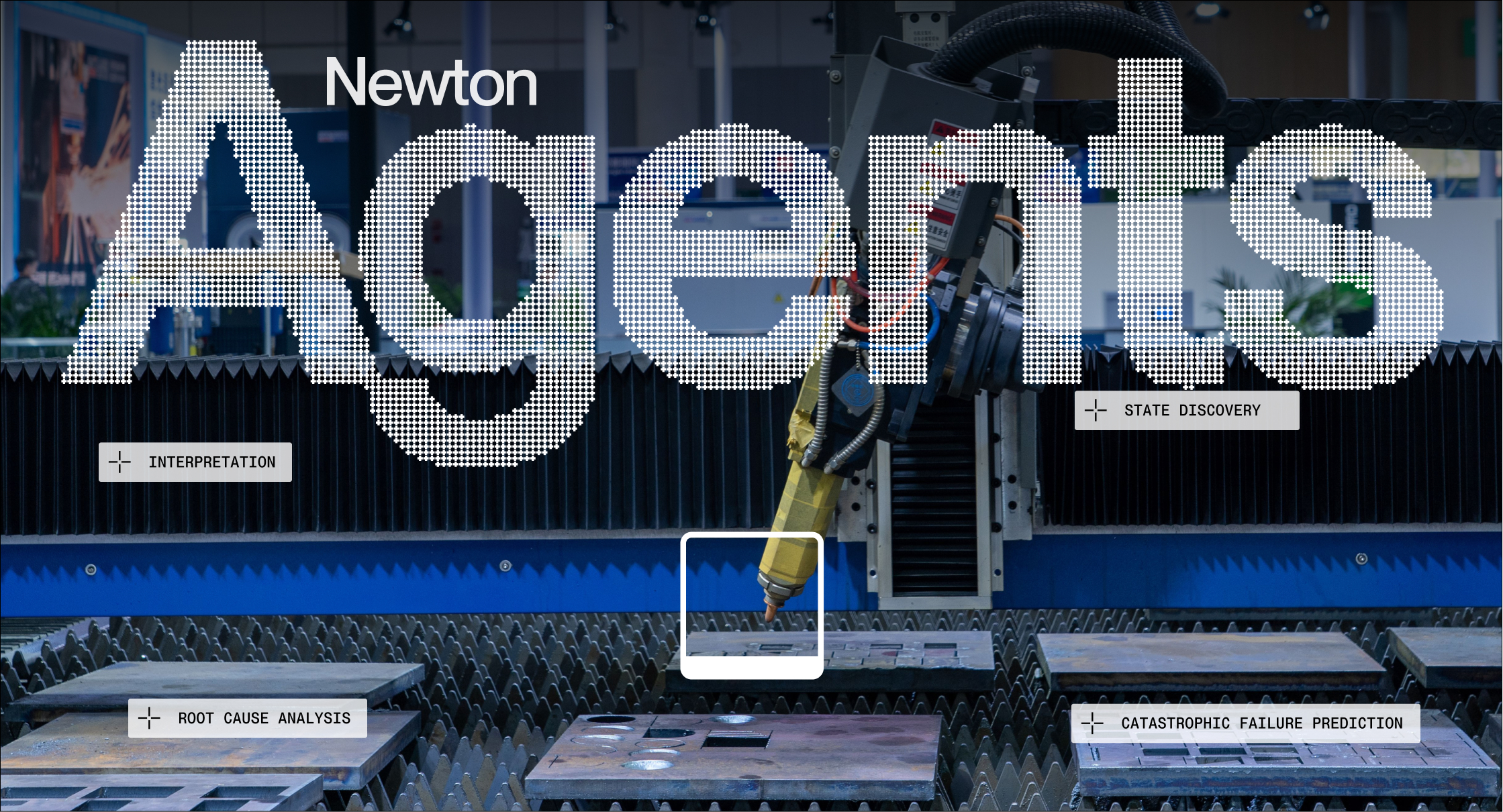
Today, we're introducing four new Newton Agents that expand what organizations can understand and automate across their physical operations. They discover operating states without labeled data, interpret detected events, identify contributing factors, and anticipate failures before they happen. Powered by Newton, Archetype AI's physical world model, these prebuilt agents accelerate Physical AI deployments across demanding real-world environments.
One model, six levels of physical intelligence
Rather than building a separate model for every machine, condition, or task, Newton learns reusable representations of physical behavior from multimodal data, including vibration, pressure, temperature, electrical current, and video. That lets it recognize complex operating conditions, interpret physical events, and adapt to new applications without starting from scratch.
That intelligence can take on more of the operational decision, and our Physical AI Maturity Model describes how. At each level, more of the decision shifts to the system as teams validate its performance and build confidence, while people continue to define goals, set boundaries, and retain oversight.
- L0 — Human-guided operations: People interpret data and make decisions, providing the starting point for many enterprises.
- L1 — Detection: AI identifies operating states, anomalies, and drift. Working with a wind energy operator, a Newton Agent fused unlabeled data from 40+ sensors per turbine to identify nine previously unrecognized failure patterns.
- L2 — Understanding: AI explains behavior and diagnoses problems using contextual and domain knowledge. For an energy company, a Newton Agent running at the edge identified and explained industrial pump conditions, including gas interference and blocked intakes, giving operators specific diagnoses instead of generic alarms.
- L3 — Prediction: AI anticipates outcomes, such as equipment or process failure, so operators can act early. A manufacturer used Newton to predict process breaks and identify contributing signals, helping the team prevent costly stoppages.
- L4 — Action: AI makes and executes decisions within human-defined limits. In the City of Bellevue, Newton combines existing traffic-camera video with live signal timing to identify late crossings and near misses. A planned next phase would connect those insights to traffic controls, such as extending pedestrian crossing times.
- L5 — Orchestration: AI coordinates decisions and actions across multiple interacting autonomous systems, balancing competing priorities to achieve broader operational goals. At its fullest, L5 leads to physical superintelligence: all five capabilities working together across an entire operation.
Together, these examples show how a single physical world model can support each of these levels across assets, processes, and environments. Newton Agents package that intelligence into prebuilt capabilities, and the four agents launching today enable organizations to automate more of their operations without building from scratch.
Meet the latest Newton Agents
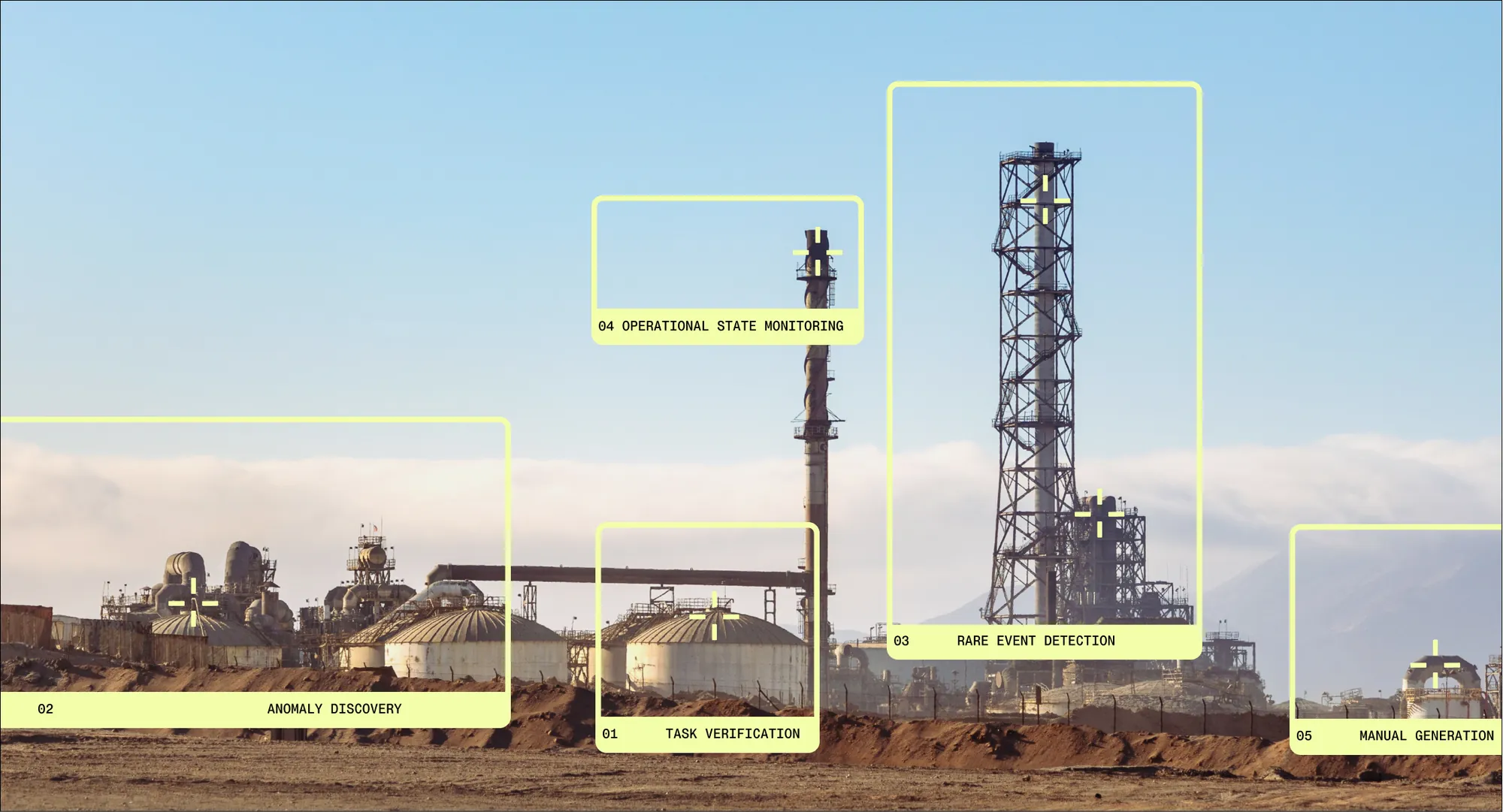
In June, our first five Newton Agents introduced ready-to-deploy capabilities for operational state monitoring, anomaly discovery, rare event detection, task verification, and manual generation. This latest release expands what’s available out of the box, from mapping operating states without labeled data to explaining events, investigating contributing factors, and anticipating failures.
Newton Agents build on a shared understanding of physical behavior, so they can find patterns across sensor data, video, and language, adapt to new assets without custom models, and support new use cases with little or no labeled data. Each addresses a specific operational need, and they can be combined into larger workflows and applications.
Detection: Map operating states without labels
State Discovery Agent identifies distinct operating states and behaviors present in unlabeled sensor data. Without requiring predefined state definitions or labeled examples, it reveals operating behaviors that are difficult to identify through rules or manual analysis.
Understanding: Explain and investigate physical events
Interpretation Agent explains detected events and sensor behavior in plain language, combining sensor metadata, state definitions, and domain knowledge with contextual information such as weather, traffic, and production schedules. By connecting physical observations to the conditions in which they occurred, it helps operators and engineers understand what happened and assess its operational significance.
Root Cause Analysis Agent identifies the sensor signals most closely associated with a detected event. By ranking deviations from learned baseline behavior, it helps engineers narrow investigations and focus on the signals most relevant to an issue instead of manually examining every data stream.
Prediction: Anticipate critical failures
Failure Prediction Agent assesses the likelihood of an imminent equipment or process failure. Built on Newton, it learns failure patterns from the limited historical data most organizations have, without training a new model for every machine. As new sensor data arrives, it updates its prediction continuously, giving teams more time to prevent downtime, equipment damage, and scrap.
How the agents work together
Consider a chemical plant running several process lines, each monitored by dozens of sensors. On one line, a slow drift begins in the reactor’s chemistry. It’s too gradual to trip the plant’s existing alerts, and the rest of the plant looks normal. Here’s how the agents work through it:
- State Discovery maps each line’s operating states from unlabeled sensor data, including different regimes, conditions, and stages.
- Anomaly Discovery, from our first set of agents, learns baseline behaviors and flags the line as it drifts away from normal states.
- Interpretation explains the sensor patterns in plain language, describing what’s changed and which units to check.
- Root Cause Analysis shows the channels that have moved furthest from normal, pointing engineers to where to look first instead of combing through 30+ charts.
- Failure Prediction estimates a rising likelihood that the line’s product goes off-spec within the next six hours, early enough for the team to intervene.
Instead of an engineer analyzing dozens of sensor trends to work out whether something is wrong, the team knows which line needs attention, where to look, and how much time it has.
That intelligence can also extend existing automation. For example, an organization could connect the agents to its maintenance system to automatically create a high-priority work order when predicted failure risk exceeds an approved threshold. Or it could integrate their outputs with an existing control application to initiate a permitted equipment adjustment, subject to predefined operating and safety constraints. Newton Agents recognize and interpret the physical conditions behind these responses, while customers define how and when actions are executed.
Organizations don’t have to deploy these capabilities as a single end-to-end workflow. They can start with the agents that address their most pressing challenges and combine them as their needs evolve.
What this means for your operations
By making physical intelligence easier to deploy, Newton Agents help organizations extend AI beyond isolated monitoring applications and into more of their operational workflows. With the new agents, organizations can:
- Understand more of their operations by mapping operating states without labeled data and explaining events as they happen.
- Automate investigations and workflows with contributing signals and context delivered alongside each alert, and outputs that can feed existing systems such as maintenance work orders.
- Intervene earlier by identifying rising failure risk before operations are disrupted.
Because every agent shares Newton as its foundation, teams build on a common base of physical intelligence rather than engineering a separate model for every application. They can start with a specific operational challenge, adapt agents to their requirements, and extend them across assets and sites. Agents deploy in private cloud, on-premises, edge, or air-gapped environments, keeping sensitive operational data under customer control.
With these four additions, Newton Agents expand what organizations can discover, understand, and predict about their physical operations, and what they can automate as a result. As AI understands physical behavior more deeply, organizations can move beyond automating predefined conditions toward systems that respond intelligently as the physical world changes.
Explore Newton Agents or request a demo to see where the new agents fit in your operations.