What is
Physical AI?
What is
Physical AI?
Physical AI is intelligence that perceives, reasons, and acts in the real world. Instead of learning from text and images online, it learns from the physical signals all around us — sensor data, video, and language — to understand how machines, environments, and people actually behave.
WHY IT MATTERS
The biggest problems are physical, not digital
The biggest problems are physical, not digital
Most AI understands the digital world of text and images. But the hardest problems — safety, reliability, and efficiency across factories, infrastructure, and cities — live in the physical world. Billions of sensors already stream data about it, and most of that data goes unused.
WHY IT MATTERS
How Physical AI is different
How Physical AI is different
Build and deploy Physical AI agents that turn real-world data into actionable insights. Maximum output from every machine, vehicle, and system — all from one platform.
Digital world and LLMs
Trained on 80% of text, 10% image and <5% video
4 modalities: text, video, images and audio.
Each modality treated individually.
Real world
50% physical sensor data, 20% video, <5% text
Hundreds of sensor modalities can be critical for every use case.
Requires fusion of multiple sensor modalities and data streams.
The biggest problems are physical, not digital
The biggest problems are physical, not digital
Most AI understands the digital world of text and images. But the hardest problems — safety, reliability, and efficiency across factories, infrastructure, and cities — live in the physical world. Billions of sensors already stream data about it, and most of that data goes unused.
BenchmarkS
From understanding to action
From understanding to action
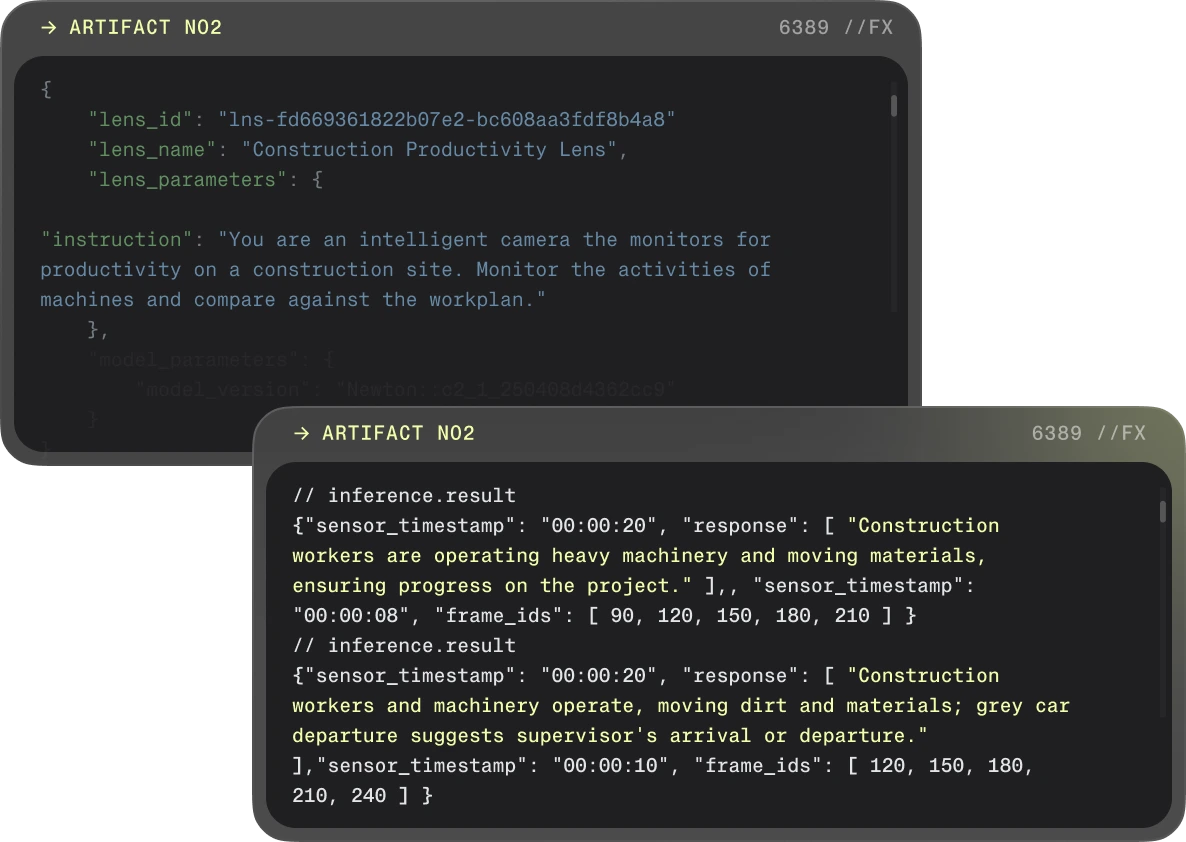
Physical AI powers Physical Agents — real-time applications that interpret the physical world and act on it.
Intelligence moves off the screen and into machines, infrastructure, and environments themselves: monitoring equipment, catching anomalies early, verifying tasks, and improving safety.
Go deeper
See the world model behind Physical AI
_Schedule a Demo
Put Physical AI to work
Talk with one of our Physical AI experts and learn how to deploy Newton Agents across a wide range of use cases — mapped to the outcomes you care about.
